Last-minute departure, February 2027:
Lush Quiet
· Malaysia, Indonesia & Philippines
July 14, 2026
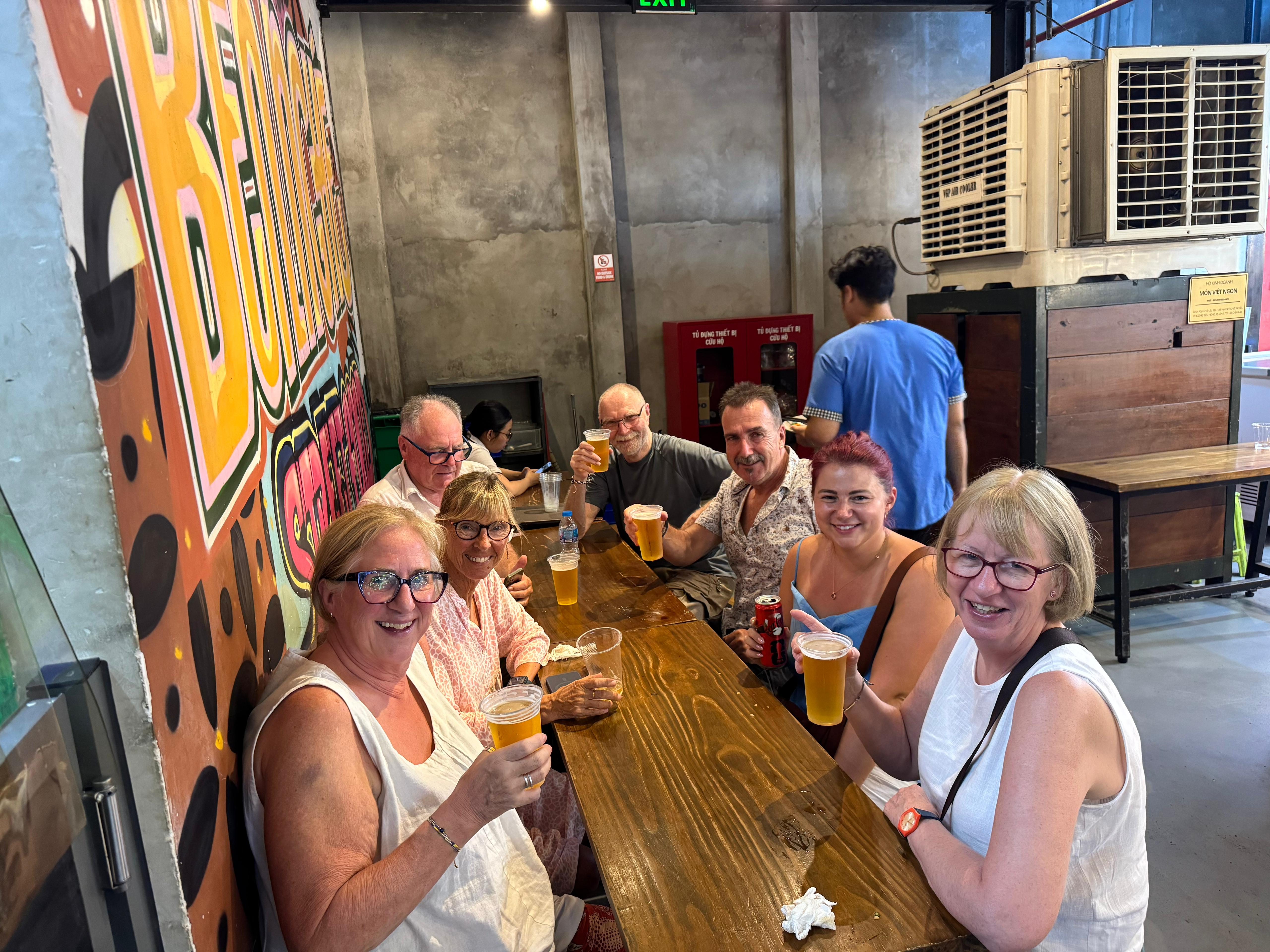
At some point in planning a three-month trip, everyone arrives at the same fork in the road. Down one path: you as trip architect, researching neighbourhoods, comparing apartments, building the itinerary spreadsheet, owning every decision from the ferry timetable to the dentist's number in Lisbon. Down the other: someone else has done that work, and you step into a trip that has already been designed, tested and staffed.
The DIY vs organised long term travel question gets argued with real heat online, usually by people convinced there is a correct answer. There isn't. There are two different products (different trades of time, money, control and company, rather than a real version and a lazy version) and the right choice depends on facts about you, not facts about travel. This article lays out both sides as fairly as we can, which requires an early declaration of interest: DECADES organises curated three-month experiences, so we sit on one side of this fork. We will make the case for the other side properly anyway, because people who choose wrongly in either direction have a worse trip, and nobody benefits from that. For the full context on what a three-month trip involves either way, start with our complete guide to how to travel for 3 months.
First, definitions, because the categories are blurrier than the debate admits.
DIY long-term travel means you assemble the trip yourself: flights, accommodation, transport between bases, activities, contingencies. You might use plenty of services along the way (booking platforms, local guides, a day tour here and there) but the architecture is yours, and so is the responsibility when a piece of it fails.
Organised long-term travel means the architecture is provided. At one end of this spectrum sit traditional escorted tours: fixed coaches, fixed schedules, thirty strangers and a flag. At the other end sits the newer model of curated extended stays: a small group based in one place for weeks or months, with accommodation, a programme of experiences and on-the-ground support arranged, but with substantial unstructured time built in. These two things share a category and almost nothing else, and much of the online hostility to "organised travel" is really hostility to the coach-tour end of the spectrum. Worth keeping in mind as we go.
Most travellers also occupy the middle: a DIY trip with an organised month inside it, or an organised programme with independent travel bolted on either end. The fork in the road is real, but it forks again.
Total control. Every choice is yours: the neighbourhood, the apartment with the good light, the decision to abandon Seville for Cádiz because you liked the sea air. On a three-month trip this freedom compounds: you can redesign month three based on what months one and two taught you, and nobody needs consulting. For travellers whose deepest pleasure is the shaping of the trip itself, this is the experience, not a feature of it.
Potentially lower cost. A self-assembled three months in Portugal might run £7,500–£10,500 for one person; a curated equivalent will typically cost more, because you are paying for design, support and included experiences. If your budget is the binding constraint and your time is free, DIY stretches money further. The gap narrows more than people expect, though. Organisers get rates individuals don't, and DIY carries hidden costs in mistakes: the wrong neighbourhood booked for a month, the "well-reviewed" apartment with the nightclub below, the non-refundable error. Our breakdown of is DIY or organised travel worth the premium? puts numbers on both.
The planning is part of the pleasure. For a certain kind of traveller (and you know already if you are one) the six months of research before departure is half the joy. Maps on the kitchen table, forums, guidebooks annotated like scripture. If that describes you, outsourcing the planning would amputate something you love.
The competence dividend. Solving problems abroad (the missed connection, the apartment mix-up, the pharmacy conversation conducted entirely in mime) builds a specific confidence that many long-term travellers name, unprompted, as the thing the trip gave them. DIY manufactures those moments; organised travel deliberately removes most of them.
DIY suits you if: you have planned complex trips before and enjoyed it; you speak or happily butcher languages; you are energised (not drained) by making arrangements and content in your own company for long stretches; your budget is tight; and unstructured problem-solving feels like adventure rather than stress.
The admin is not trivial, and it is not evenly distributed. A three-month trip involves, conservatively: dozens of accommodation decisions, transport across every leg, insurance built for long trips, entry rules and day-counting (see our guide to visas for long-term travel), healthcare mapping, and a hundred smaller judgements, all made about places you have never been, in markets you don't know. Some people find this energising. A great many capable, intelligent people find it a months-long part-time job they never wanted, and some never take the trip at all because the planning wall defeats them. The gap between wanting and doing is real: research from UK retirement operator Inspired Villages found that nearly 25% of retirees have either taken extended travel or would seriously consider it; a figure whose second half contains everyone still stuck at the spreadsheet stage. The strongest argument for organised travel is that it converts trips from imagined to taken.
Access and depth from day one. A good curator's local knowledge is not the same as your research, however diligent. It is the cooking teacher who doesn't advertise, the neighbourhood that suits you better than the famous one, the timing that avoids the crowds, accumulated across many trips and handed to you on arrival. DIY travellers usually acquire this knowledge too, but they acquire it during month one; organised travellers start with it and spend month one somewhere deeper.
Built-in company. This one is decisive more often than any other. Travelling alone, you carry the social side of the trip as well as the logistical one, and three months is long enough for solitude to stop feeling like freedom. The single most common regret among DIY long-term travellers (whether alone by choice, by circumstance, or after bereavement) is loneliness in weeks six through twelve. A small-group model provides a social fabric without demanding constant togetherness: people to eat with when you want them, independence when you don't. It is very hard to arrange this for yourself in advance, and very valuable to have arranged for you.
Support when it matters. Most three-month trips include at least one moment (a health scare, a lost passport, a family emergency at home) when having someone on the ground who knows the system changes everything. Insurance pays the bills; support gets you to the right hospital and sits with the paperwork. DIY travellers manage these moments too, and often manage them well. But managing them alone, in a second language, in your late sixties, is a meaningfully different experience from being helped.
Organised suits you if: the admin deters you; you want company available without having to engineer it; you would rather spend your energy on the place than on the logistics; a health condition (or family at home who will worry less knowing support is there) makes on-the-ground help valuable; or this is your first extended trip and you want the training wheels for the model of life, not just the destination.
Set the two paths side by side and apply what we call the real cost test: count not just the sticker price, but the hours, the risks and the things money actually buys.
A few further truths that both camps tend to soft-pedal:
DECADES was built for a particular person at this fork: someone who wants the depth of long-term travel (the settled base, the local life, the three-month arc that a holiday cannot deliver) but who does not want, or does not want to risk, the several hundred hours of unpaid project management that DIY requires. Our programmes place a small group of like-minded people in one location for three months, with the accommodation, a spine of curated experiences and on-the-ground support handled, and generous unstructured time in which the trip becomes your own. On DECADES' Japan programme, that means the language teacher, the market mornings and the neighbourhood are arranged before you land; what you do with your Tuesday is entirely up to you.
That model is not for everyone, and this article has tried to be clear about who it is not for. If you read the DIY section above with mounting excitement, plan it yourself, take our route ideas in 3-month itinerary ideas for retirees as raw material, and have a wonderful trip. The trip matters more than who books it.
Is organised long-term travel more expensive than DIY? Usually, per equivalent night: you are paying for design, access, company and on-the-ground support, which are real things with real value. But the gap in the DIY vs organised long term travel comparison narrows more than people expect: organisers get rates individuals don't, and DIY carries hidden costs in mistakes, from the wrong neighbourhood booked for a month to the non-refundable error.
What is the difference between a coach tour and a curated extended stay? Almost everything except the category label. A traditional escorted tour means fixed coaches, fixed schedules and constant movement; a curated extended stay places a small group in one location for weeks or months, with accommodation, a spine of experiences and support arranged, and most of your time your own. Much of the online hostility to "organised travel" is really hostility to the coach-tour end of the spectrum.
Which is better for solo travellers over 60: independent or group travel? For many solo travellers, built-in company is the decisive factor. Three months is long enough for solitude to stop feeling like freedom, and the most common regret among DIY long-term travellers (whether alone by choice, by circumstance, or after bereavement) is loneliness in weeks six through twelve. A small-group model provides people to eat with when you want them and independence when you don't.
Can I combine DIY and organised travel in one trip? Yes, and many travellers do exactly that: a DIY trip with an organised month inside it, or an organised programme with independent travel bolted on either end. The fork in the road is real, but it forks again; the middle path suits anyone who wants both the competence dividend of independent travel and a stretch where the scaffolding is handled.
Planning your own three months away? Start with the free DECADES Gap Year Guide: the practical starting point covering budgets, planning, health and everything between deciding to go and boarding the plane. Get your free copy here.
The irony of the DIY vs organised long term travel debate is that most people never actually decide. They default: into DIY because they assume organised means coach tours, or into a packaged holiday because the DIY planning defeated them, with the three-month version of the trip lost in between.
So decide on purpose. Ask yourself squarely whether planning energises or depletes you; how much company you will want in week eight, not week one; and what support is worth if the phone rings at 2am. Then choose the structure that gets you there. The destination that matters is not Portugal or Japan; it is the version of you that three months of living differently produces, and both roads lead to it, provided you actually set off.
About the author: Laura Cannon is the founder of DECADES. She has spent the past twenty years travelling solo and long-term across the world; experience she now puts into designing three-month experiences for people in retirement and semi-retirement.
Author

