Last-minute departure · DEC 2026
Open Road
Australia · New Zealand
October 2, 2026
Peter is 70, well-travelled, and not remotely done yet. These are his Notes — small observations from the road.
Johnny Morris, he of “Animal Magic” fame, once said that “we know the price of everything and the value of nothing”.
When you are out and about enjoying the sights and sounds, tastes and textures; when you are cycling between the lush green rice paddies or past a local school when the children erupt from their lessons shouting greetings and waving, take a little longer and don’t just look – rather observe a while. You are an adventurer, not a tourist.
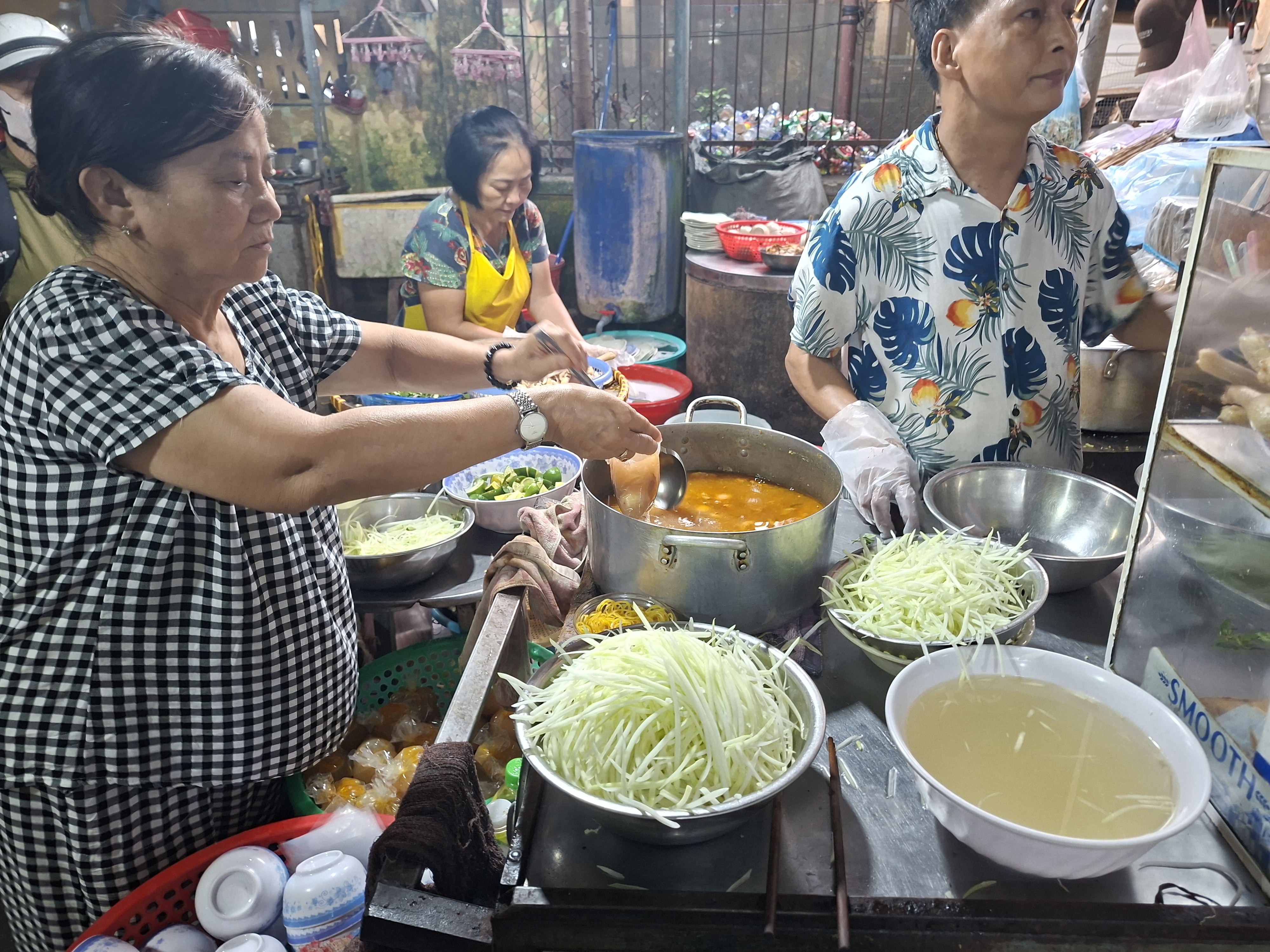
Vietnam is sometimes described as an “enterprise economy”. But for most of those you will meet it is rather closer to survival. Why else would an elderly couple set up a small bucket brazier on a busy street corner and attempt to sell sweetcorn (maize) ears, hot, caramelised and scorching to the fingers. Surely, they must have a particular imperative to spend their evenings that way. Or pedal rickshaw drivers, grab bikers or the unofficial bike riders that importune you to a tour or a ride back to your hotel. That last piece of business of the day may make a real difference to them and their family, but when you decline, they go on their way with no apparent rancour.
This is a plea to be generous. Buy some lottery tickets from the man on a pavement mat and give them away further down the street. Leave a new 5000 dong note after every stop by a beggar’s bowl; that is just 15p to you. That waitress who served you is probably earning about GBP 1 an hour (35000 dong) and probably working a 12- or 14-hour day. None expect a tip; it’s just a nice way to say thank you at little expense to yourself.
You are a DECADES Pioneer, and you will have flown a long way to be much more than a picture-snapping tourist. So I know you won’t be that person who walks in and out of a shop with no word of greeting or stops to take a photograph of a street vendor without acknowledging their presence. Make use of “Zim Chow” (Hello) and “Kum on” (Thank you). If nothing else, it might enliven the shop keeper’s day as they often appear inured to the tourist’s indifference and the old lady selling the smallest of shrimps will reward you with a beaming, if toothless, smile.
--
The losing side
I barely registered the Vietnam war when I was at school; I had maths and French and girls on my mind. But meanwhile the Viet Cong and northern Vietnamese army were completing long years of war. You may recall the images of Saigon residents trying to enter the US compound or perhaps the helicopters being pushed from the deck of an American warship. In Vietnam today it is called the American war, because there was the French war before that, and other conflicts and invasions before that.
Although 1975 is long ago soldiers of the southern army, the government forces, still live in Saigon and many of the beggars are these veterans. I cannot now recall how I got into conversation with this man. He sat in threadbare cropped jeans and a T-shirt. Clean clothes that at home I would have used as a motorbike cleaning rag. His remaining leg was crossed where his right knee once supported him in battle right up to the moment “friendly-fire” in the shape of American bombs dropped on their positions changing his life and his hopes.
Heavily scarred on his right torso and with arthritic hands he smiled his gratitude and, assuming I was French, bade me sit a while with him. I rather expected a request for “an extra gift” as would be the case in the Philippines. But this ex-soldier just wanted to chat a little and so, in my rudimentary French, we swapped stories of service life.
He was a boy, barely thirteen, when he was forcibly conscripted, along with most from his village, into the South Vietnamese army. Apparently, life was not so different to that in the village. He ate about the same, got shouted at a bit more and was taught how to use a rifle. I couldn’t follow all that he said except his melancholy answer to my query about why he had to beg if he was an ex-soldier. There is no pension for a soldier from the Hanoi government, the winning side of the war, for these men. No disability benefits and nothing like the Royal British Legion exist for him and the other veterans. Only the Catholic Church helps out with medical issues on occasion but are unable to support with food which leaves this soldier reliant on the charity of tourists and the Buddhist temple. I left him after a while when my protesting knees enforced an end to our conversation. But I would have left soon anyway. We had said all that we could. My beer that evening didn’t taste quite so good.
--
Emily and the glass ceiling.
Emily served me breakfast most mornings in my hotel in Hanoi. She took the time to correct my pronunciation of the few words and phrases I had discovered in Vietnamese. A single mother with a son of 9 years she did well in school and then university during a two-year Tourism and Hotel Management course. Emily had worked at this hotel for just over four years but made no real progress in her career. She was pleased to earn what is not a bad amount per hour for a hotel worker of 45000 dong. It is more than a room cleaner, much more than the boys who open the door, but quite a bit less than the men on the reception staff and only a small percentage of the hotel managers’ salary.
Although attractive, Emily is not tall and graceful as the two ladies who do work on reception appear and she is not as well connected as Miss A who worked part time. Emily does speak good English, some French and Italian and has worked in Sardinia and on Ha Long Bay boats, but is quietly frustrated. She is unable to get a more responsible position in any hotel to which she has applied. On my last morning, we parted as friends would and with Emily giving a wry smile with her parting comment “when you come back, I’ll still be here”. I am more likely to return to Vietnam than Emily is likely to break through the glass ceiling.
--
Drying rice
Just a block and half a street from my hotel in Saigon was Casson’s, a smallish restaurant, maybe 30 tables, and a lively place sometimes but in the late mornings there was normally only me and a few students bashing away on laptops or, as I found on a number of occasions, a graduate remote working using the free internet connection into an office in Hong Kong or Singapore with complicated spreadsheets on the screen, or another teaching Vietnamese remotely to a European.
After my third early lunch the waitress had a beer moving towards my table as I entered and, while the cracked rice dishes were fine the menu was not extensive. It was a nice place to stop after a morning exploring HCMC but I went back for the chat. Not being busy, sometimes the girls would sit and ask me about England and the world outside Vietnam. Very few young Vietnamese think they will be able to travel, and many just don’t wish to do so. I discovered there is a quiet pride and patriotism in Vietnam.
One day I asked why there were empty sacks spread with cooked rice on the pavement a little way from the restaurant. I was told that a man came to collect the rice that was left over from the day’s service and that this was not so unusual. It reminded me of Manila where many who live in the cemeteries around the city collect chicken bones and rice from Jollibee and similar places. Everything has a value for someone.
--
I was fortunate. I rather fell into a career that meant I always was warm, often over hot, and always had something to eat. And it has taken me to many places in the world. In Vietnam too, luck and a willingness to try something new, something unintended, has paid off for some of those that I met.
Education
“Education, education, education” was how Tony Blair set out his priorities for office.
As everywhere else, education makes the difference as does a willingness to adapt. Teachers become guides, lawyers open restaurants, a chemist I met runs a large massage parlour and an upmarket gentlemen’s barbershop.
Tourists are in Vietnam every month of the year but there are only really five months from April that are really busy with not only Europeans but also visitors from the Indian sub-continent and Vietnamese from the north or south depending on the climate. There is an intense competition for the tourist $ and while this is most obvious on the streets of Saigon and Hanoi it pervades every tourist area even if only a low-key direction into a parking place in front of a restaurant so that the “guide” makes a few Dong for the custom.
Guides all seem to do reasonably well but this is not so true for those with large overheads such as a minivan or working for a company. While minivans and jeeps are one-off gigs booked per tour a good chunk of the total income goes in these overheads and the tips from the passengers makes the difference. Not so for those speaking Vietnamese good English, Italian or Spanish and working alone with few overheads. Most successful cash-wise amongst these are the walking tour guides, especially the popular evening food walking tours. At USD 35 a head for a couple of hours the only overheads for the guide are the dishes purchased at each stop. One is subtly manipulated into eating more of the heavier dishes early in the tour that leaves little appetite for the later higher protein, more expensive, dishes.
My tour guide in Hue was knowledgeable about the history of the area but less so about the dishes but I did discover places with him to eat that I would not otherwise have found. One can judge how successful he is by the fact that his three children go to the American school and his and his wife’s earnings support four generations.
Many of those you will meet sleep in dormitories in the suburbs or, the luckier ones, closer to the hotel or perhaps in family rooms above the bar. This is temporary however as in the low season very many return to the smaller villages or towns where life is less expensive hoping to be reengaged the next year.
--
Vietnam is a socialist country but George Orwell’s Animal Farm often comes to mind as I travel in Asia.
.jpeg)
Author

