Last-minute departure · DEC 2026
Open Road
Australia · New Zealand
March 27, 2026
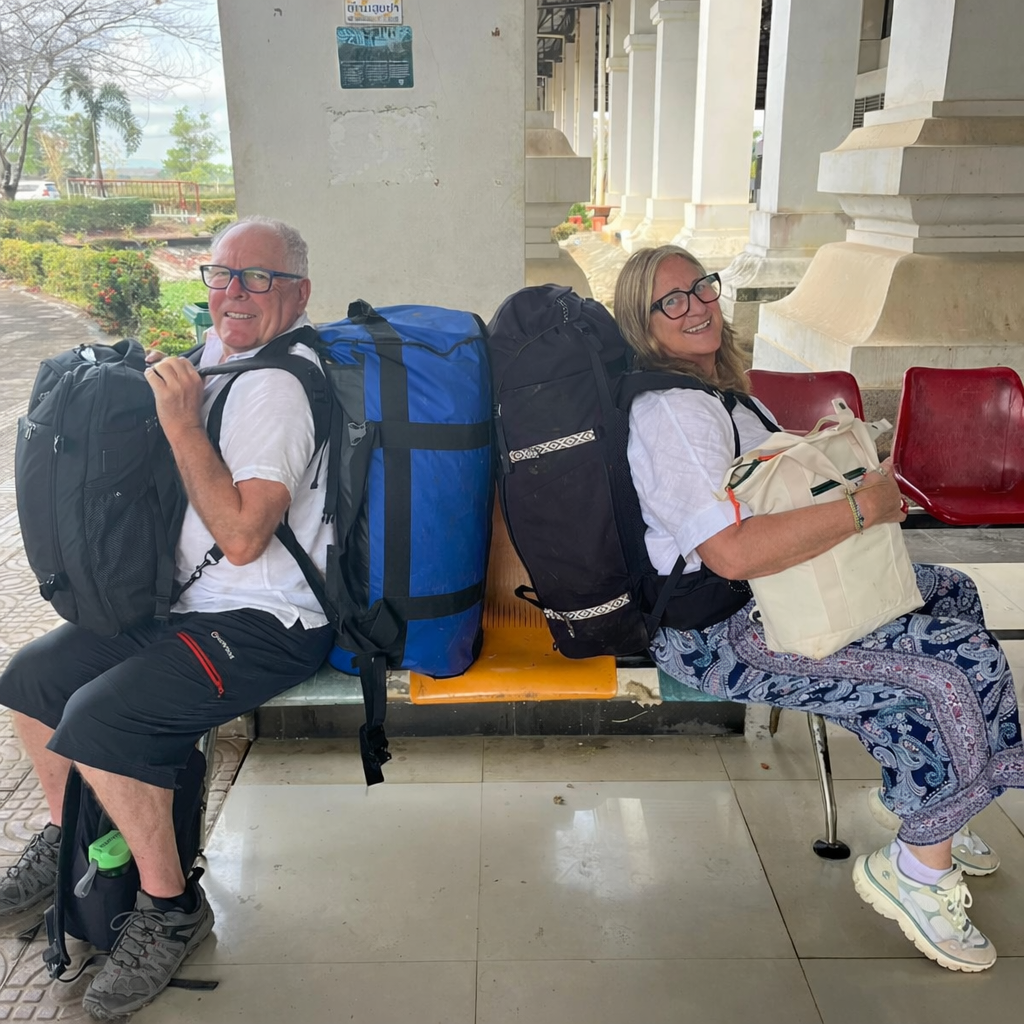
You've planned the trip, sorted the finances, and had the conversations. Now you need to actually get ready to go. This guide covers everything you need to sort in the final weeks before departure — from what goes in your bag to what happens to your house, your health, your paperwork, and the dozen small things that people consistently forget until it's too late.
This is organised by category, not by timeline. If you want the strategic planning sequence — what to do at 12 months, 9 months, 6 months — the step-by-step planning guide covers that. This is the operational checklist for the final stage: the four to six weeks before departure, when the planning turns into preparation.
Passport. Confirm it's valid for at least six months beyond your return date. Most countries enforce this. If you're cutting it close, renew now — standard UK renewal takes 10 weeks.
Visa documentation. If your destination requires a visa or pre-arrival authorisation, confirm it's been processed and you have the evidence — printed and saved digitally. For Schengen Area travel, you don't need a visa as a UK citizen, but you do need to be prepared to show proof of accommodation, return flights, and sufficient funds if asked at the border. This happens rarely. It's annoying when it does.
Travel insurance policy. Print the policy summary, the emergency contact number, and the claims procedure. Save digital copies in your email and on your phone. Make sure you understand what's covered and what isn't — particularly regarding pre-existing conditions, medical evacuation, and cancellation.
GP letter. A letter from your GP summarising your medical history, current conditions, and prescribed medications. This is essential for carrying prescription medication through customs, and useful if you need medical treatment abroad. Some GPs charge for this (£20–£50); others provide it as part of standard care.
Emergency contact document. One page, shared with two or three trusted people at home: your itinerary (even if approximate), accommodation addresses and phone numbers, your insurance policy number and emergency line, your bank's fraud team number, your next-of-kin details, and any medical information that a hospital might need. This takes an hour to compile and is invaluable if anything goes wrong.
Power of attorney or authorised representative. If you'll be away for three months, someone at home should have the authority to act on your behalf for financial, legal, or medical decisions. A lasting power of attorney is the formal route; a simpler letter of authority may suffice depending on your circumstances. Arrange this well before departure.
Copies of everything. Passport, driving licence, insurance policy, flight confirmations, accommodation bookings. Photograph or scan every document. Store copies in your email, on your phone, and with someone at home. If your bag is stolen, you need to be able to prove who you are and where you're staying without the originals.
Sufficient medication for the entire trip plus a two-week buffer. This is non-negotiable. Obtaining UK prescription medication abroad is complicated, expensive, and in some countries impossible. Carry everything you'll need in your hand luggage, in original packaging, with the pharmacy label intact. Your GP letter should reference every medication by name and dosage.
Prescription repeat arrangements. If your trip spans a prescription renewal period, arrange with your GP or pharmacy to issue the full supply before you leave. Some GPs will issue a longer prescription on request for travel purposes; others require a private consultation. Start this conversation at least six weeks before departure.
Vaccinations. Check the NHS Fit for Travel website for your destination's requirements. Some vaccinations (hepatitis A, typhoid) are available free on the NHS. Others (rabies, Japanese encephalitis) are not, and can cost £50–£150 per course. Multi-dose courses require planning — some need two or three appointments spread over several weeks.
Dental and optical check-ups. Get both done before you leave. A dental emergency abroad is manageable but expensive and inconvenient. New glasses or contact lenses are easier to sort at home.
First aid kit. Not a comprehensive medical bag — a practical one. Paracetamol, ibuprofen, antihistamines, rehydration sachets, plasters, antiseptic cream, insect repellent, sunscreen (take enough for the first two weeks; buy locally after that). Prescription medication for travel-specific conditions — anti-malarial tablets if relevant, motion sickness medication, anything your GP recommends for your destination.
The single most important principle: you need far less than you think. Three months feels like it demands three months' worth of clothing. It doesn't. You'll do laundry. You'll buy things locally. The bag you can barely lift will become your worst enemy within a week.
One main bag, one day bag. A medium suitcase or a large backpack (65–75 litres) for your main luggage. A smaller daypack (20–30 litres) for daily use and as your carry-on. If you're tempted by a second large bag, resist. Mobility matters more than wardrobe variety, particularly if you're moving between locations.
Clothing: the capsule approach. For a warm climate: 5–7 tops, 3–4 bottoms, 1 light jacket or cardigan, 1 waterproof layer, comfortable walking shoes, sandals, swimwear, one slightly smarter outfit for restaurants or events. For a cooler or variable climate: add a warm layer, a scarf, and closed-toe shoes. Everything should be machine-washable. Leave anything dry-clean-only at home.
Specific to this demographic: Comfortable, well-broken-in walking shoes are non-negotiable. Your feet will do more work than they do at home. Compression socks for long flights. A wide-brimmed hat for sun protection. Clothing with zip pockets for security in busy areas.
What not to pack. Formal wear (you won't need it). More than two pairs of shoes (you won't wear them). Guidebooks (use your phone). Excessive toiletries (buy locally — they're cheaper and lighter). Anything you haven't worn in the last month (you won't wear it abroad either).
Phone. Unlocked, so you can use a local SIM or international eSIM. Check with your UK provider about roaming charges — some include reasonable overseas allowances, others charge extortionately. An international eSIM (providers like Airalo or Holafly) is often the simplest and cheapest option for three months.
Offline essentials. Download offline maps for your destination (Google Maps allows this). Download a translation app with offline language packs. Save copies of all critical documents in your email and in a secure notes app. WiFi is not available everywhere, and relying on it for navigation or communication in rural areas is risky.
Charging. A universal travel adaptor. A portable battery pack (at least 10,000 mAh) for long days out. Charging cables for every device. These are small, light, and worth their weight when your phone dies at 3pm and you need it for directions.
Tablet or e-reader. Optional but recommended for three months. An e-reader holds hundreds of books and weighs nothing. A tablet provides entertainment for long evenings and a larger screen for video calls home.
Post. Redirect through Royal Mail (available for up to 12 months) or arrange for someone to collect it. Uncollected post is a security signal and a practical problem if anything time-sensitive arrives.
Utilities. Set heating to frost protection in winter. Consider turning off water at the stopcock if the house will be empty for the full three months — the single most expensive home emergency while you're away is a burst pipe in an unoccupied house. Leave the fridge running but empty and clean.
Security. Use timer switches on a few lights. Ask a neighbour to check the property weekly. Don't announce your absence on social media. If you have a burglar alarm, make sure someone local has the code and the contact number for the monitoring company.
Car. If you're not renting it out, declare it SORN if appropriate, or arrange for someone to start it periodically. Check your insurance covers extended periods of non-use.
Subscriptions and memberships. Pause or cancel anything you won't use: gym, streaming services, magazine deliveries, meal boxes. The savings over three months are modest individually but meaningful in aggregate.
Garden. Arrange for someone to manage it. Three months of neglect in the growing season is recoverable; three months of neglect in winter is less of a concern.
Insurance. Notify your home insurer that the property will be unoccupied. Standard policies often exclude claims after 30–60 days of vacancy. Your insurer may require specific conditions — timer switches, regular inspections, water turned off — to maintain cover.
Confirm all flights and first-week accommodation. Check in online if possible. Ensure your emergency contact document is with the right people. Charge all devices. Pack your medication in your hand luggage, not your checked bag. Get local currency for your first day — enough for a taxi, a meal, and incidentals.
Say your goodbyes. Leave the house clean, cold, and sorted. Lock the door.
The rest you'll work out when you get there. That, as it turns out, is one of the best parts.
For the broader planning context — the full 12-month timeline that leads up to this final preparation — the step-by-step planning guide covers everything. And for the complete picture of what a golden gap year involves, start to finish, the full guide has it all in one place.
Author

