Last-minute departure · DEC 2026
Open Road
Australia · New Zealand
March 26, 2026
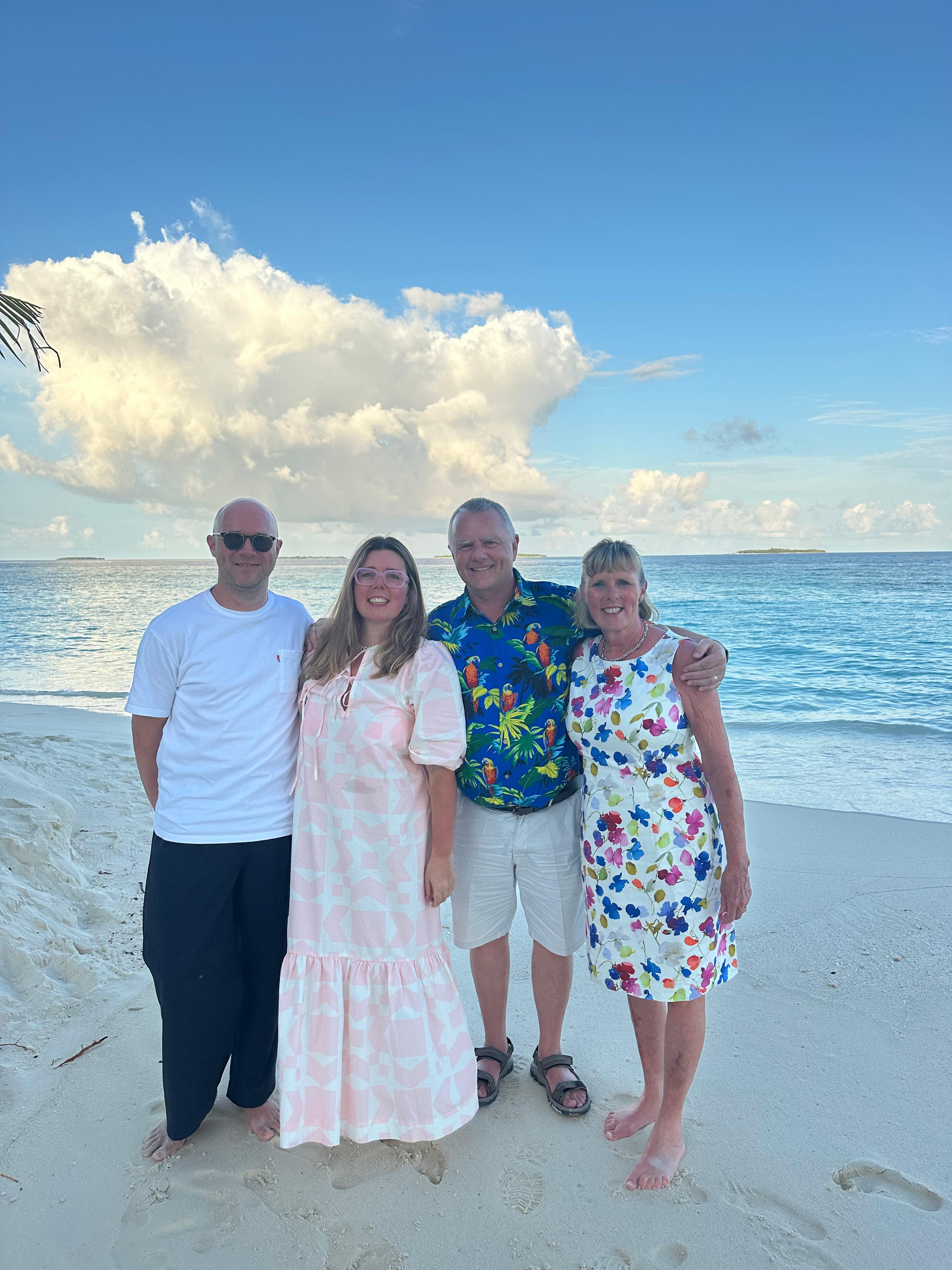
For many people, this conversation is harder than the trip itself. The planning is manageable. The finances are workable. The logistics are solvable. But sitting down with your adult children, your partner, or your elderly parents and telling them you’re spending three months on the other side of the world — that’s where the real difficulty often lies.
It shouldn’t be surprising. A golden gap year is, by definition, a departure from the expected pattern of retirement. Your family has a picture of what this stage of your life looks like, and that picture probably doesn’t include you renting an apartment in Lisbon for three months. Disrupting it provokes reactions that are less about the trip and more about what it represents — change, distance, the unsettling possibility that you have needs and desires that your family life doesn’t fully satisfy.
Understanding what the conversation is actually about, rather than what it appears to be about, is the key to having it well.
The surface concerns are predictable: your health, your safety, the money. Is it safe? What if you get ill? Can you afford this? These are legitimate questions, and they deserve serious answers.
But beneath them, there’s often something else. Adult children who react strongly to a parent’s gap year plans are frequently responding to a shift in the family dynamic. For decades, you’ve been the stable centre — available, nearby, predictable. The announcement that you’re leaving for three months, by choice, upends that stability in a way that can feel threatening even to fully independent adults.
This is particularly acute for adult children with young families. The practical calculation is real: three months without a grandparent available for childcare, school runs, or weekend visits is a genuine loss. The emotional calculation is subtler: “Mum is choosing something for herself over being here for us” is a feeling that most children won’t articulate directly but may express through excessive concern about safety or money.
The most effective response is not to argue but to acknowledge. “I understand this feels like a big change. It is a big change. Here’s why I want to do it, and here’s what I’ve done to make sure it goes well.” Information defuses anxiety far more effectively than reassurance.
This is the conversation people handle least well, largely because it touches on the relationship itself.
A partner who doesn’t want to come — or can’t, due to health, work, or personal preference — is in an uncomfortable position. They may feel left behind, resentful, or anxious about what three months of separation means for the relationship. They may also feel guilty for not wanting to go, as though their reluctance is holding you back.
Honesty is essential here, and it needs to run in both directions. If you want to go and your partner doesn’t, that’s not a crisis — it’s a difference, and differences are navigable. Many couples manage gap years successfully by agreeing to a mid-trip visit (the partner comes out for two or three weeks), establishing a regular communication rhythm, and being explicit about what the time apart means: not a rejection of the relationship, but a recognition that you have different needs at this stage of life.
What doesn’t work is pretending the difference doesn’t exist, or bulldozing through your partner’s concerns in pursuit of your own plans. The trip will be compromised — and the relationship genuinely strained — if it starts from a place of unresolved tension.
If both of you are considering the trip but aren’t sure whether to go together, the dynamics are different. Three months is long enough for different preferences to surface, and couples who travel well together for a fortnight don’t always travel well together for a quarter of a year. Honest negotiation about independent time, separate interests, and personal space is worth having before you book.
This is the concern that carries the most genuine weight, and the one where there’s no clean answer.
If your parents are in good health and largely independent, the conversation is straightforward. You’re going, you’ll stay in touch, you’ll be reachable in an emergency, and someone will check in on them regularly. Most parents in this situation are supportive — often more so than adult children.
If your parents are frail, unwell, or dependent on you for regular support, the calculation is different. The honest question is: what would happen if something went wrong while you’re away? If the answer is “someone else could manage it,” the trip is feasible with proper planning — a designated contact, a clear care plan, and your parents’ knowledge of and consent to the arrangements. If the answer is “only I could manage it,” the trip may not be the right choice at this time. That’s a painful conclusion, but it’s a responsible one.
The middle ground — parents who are managing but declining — is the hardest to navigate. There’s no rule here. Only a personal judgement about risk, responsibility, and the reality that the window for this kind of travel may close for reasons that have nothing to do with your own health.
Earlier is better. The worst version of this conversation happens when it feels like an announcement — a decision already made, presented for approval. The best version happens when it’s framed as an intention, shared at a stage where there’s still room for discussion.
“I’m seriously thinking about taking three months to travel in retirement. I’ve been researching it, and I’d like to talk it through with you” is a fundamentally different opening from “I’ve booked three months in Portugal.”
The first invites dialogue. The second provokes reaction. The outcome may be the same — you go, having addressed the concerns raised — but the relational cost is vastly different.
Practically, starting the conversation 9–12 months before planned departure gives everyone time to adjust. Initial reactions are rarely final reactions. A daughter who is horrified in January may be genuinely excited by June, once she’s seen the planning, met the idea with more nuance, and had time to process the change.
This is the part of the conversation that happens inside your own head, and it’s worth addressing directly because it stops more gap years than any external objection.
The guilt is about choosing yourself. About spending money on an experience that benefits you, during a period of life when the cultural expectation — spoken or unspoken — is that your resources and your time should increasingly flow towards your family.
This expectation weighs more heavily on women, though it’s not exclusive to them. Many women in their 60s have spent decades organising their lives around other people’s needs: children, partners, aging parents, employers. The idea of spending £10,000 and three months on something entirely for themselves can feel almost transgressive.
The guilt is understandable. It is not, in most cases, justified. You have spent decades being available. The desire to do something significant for yourself in retirement is not selfish — it’s healthy. And the person who returns from a gap year is typically more present, more engaged, and more generous than the one who stayed home and gradually became resentful about opportunities not taken.
If the guilt is persistent, it may help to reframe the trip not as something you’re taking away from your family, but as something you’re bringing back. The perspective, the energy, the renewed sense of purpose — these benefit everyone around you, not just you.
Sometimes it does. Not everyone will support your decision, and no amount of planning, information, or careful framing will change that.
Adult children who remain opposed after a full and honest conversation are, in most cases, expressing something about their own anxiety rather than making a rational assessment of your plans. That doesn’t make their feelings irrelevant, but it does mean you’re unlikely to resolve the disagreement by providing more information.
The question then becomes: do you go anyway? The answer depends on your relationship, your values, and your assessment of the situation. Many people do go despite family opposition, and the relationship usually survives — often improving once the family sees the trip go well. A smaller number decide that the relational cost is too high, and defer. Both are legitimate choices.
What isn’t useful is waiting indefinitely for permission that may never come. If you’ve done the work — planned carefully, addressed the concerns, shared the information — and the objection remains, the decision is ultimately yours.
In most cases, the initial reaction softens over time. What helps it soften is visibility: sharing your planning, forwarding an article or a budget breakdown, introducing the idea gradually through specifics rather than abstract enthusiasm.
The stories from retirees who’ve done this can be genuinely useful here — not as ammunition in an argument, but as evidence that real people with real families have navigated these conversations and come out the other side with relationships intact and experiences that changed their lives.
And for the broader context of what a gap year involves — the practical, financial, and emotional dimensions — the complete guide is worth sharing with sceptical family members. Sometimes the best way to defuse concern is to demonstrate, through the quality of your preparation, that this is one of the most considered decisions you’ve ever made.
Author

