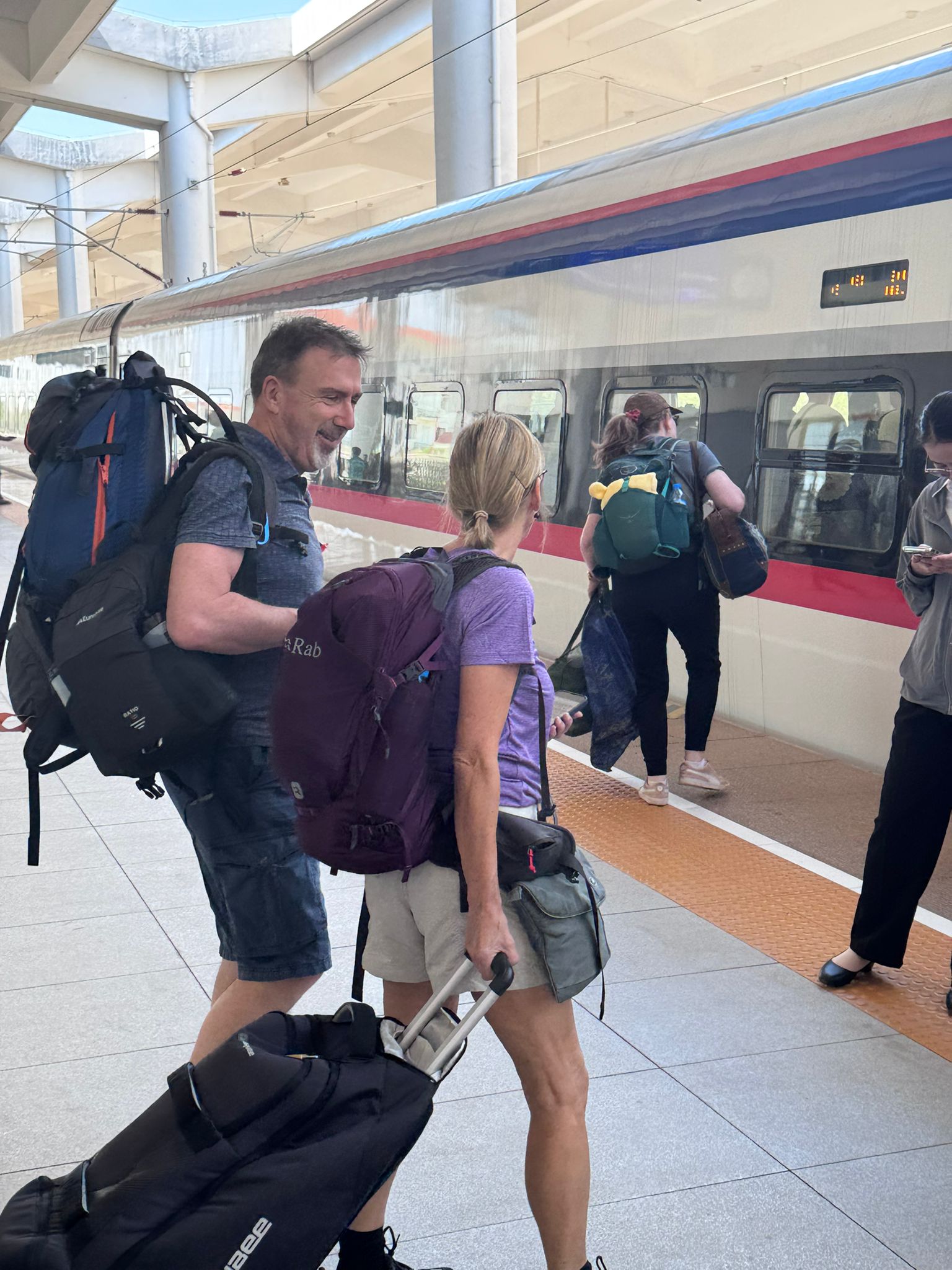
The most counterintuitive fact in long-term travel: a packing list for 3 months of travel is shorter than a packing list for 3 weeks. Not the same length; shorter.
The logic, once you see it, is unarguable. On a two-week holiday you pack for every eventuality because there’s no time to solve problems locally. On a three-month trip, you live somewhere. You do laundry weekly, buy what you’re missing from shops that serve the people who live there, and carry a wardrobe rather than a costume department. The travellers wheeling 30-kilo cases through Lisbon airport are the two-week people. The three-month people glide past with a medium case and a spring in their step.
This article is the complete packing deep-dive: what goes in the case, what stays home, and the reasoning that lets you adapt the list to your own trip. It’s part of our complete guide to how to travel for 3 months. If you’re after the broader pre-departure picture (documents, health prep, home shutdown), that lives in our Pillar 1 companion piece, Gap Year for Retirees: Complete Packing and Preparation Checklist, and the household side is covered in how to pause your life for 3 months. Here, we are strictly at the case-and-contents level.
The philosophy: pack for a fortnight, live for a quarter
Every good packing list for 3 months travel is built on one rule, the fortnight rule: pack for two weeks, wash weekly, then stop. Two weeks of clothing plus weekly laundry equals infinite clothing. Everything beyond that is weight you’ll carry through ninety days of train platforms, apartment staircases and cobbled streets for no benefit whatsoever.
Three supporting principles:
- Everything earns its place twice. Each item should work in at least two situations. The linen shirt that does dinner and daytime stays; the outfit that does only one imagined evening goes back in the wardrobe.
- Buy there, not here. Sun cream, toiletries, an umbrella, a beach towel, a warmer jumper than expected: all cheerfully available wherever you’re going, often better suited to the place than what you’d bring. Pre-solving problems you don’t have yet is how cases get heavy.
- Test your case at home. Pack it, then carry it up and down your own stairs and along the street to the postbox. If that’s tiresome in your own postcode, it will be miserable in Naples. Repack accordingly.
The target: one medium checked case (or large cabin case) of around 15–18kg, plus one day bag. For any destination, in any season. It’s achievable, and it changes the texture of the entire trip.
The luggage itself
Worth choosing carefully, because you’ll handle it hundreds of times.
- Main case: a quality four-wheel spinner, 65–75cm, from a maker with a serious warranty. Spend £150–£300 once; the difference between good and cheap wheels reveals itself on the first cobblestone. Soft shells forgive over-packing; hard shells protect contents and shrug off rain. Either is fine; wheels and weight matter more than shell.
- Day bag: one comfortable 15–20 litre backpack or crossbody that fits under an airline seat and carries the daily kit: water, layer, camera, documents. This bag never leaves your side in transit and holds everything you couldn’t replace.
- Packing cubes: the one travel gadget that earns unqualified endorsement. A set of four or five (£20–£30) turns living out of a case for three months from archaeology into admin. One cube per category; the case stays civilised in week eleven.
- A folding tote or duffel, flat-packed, for laundry runs, market shopping and the modest accumulation of ninety days. It comes home fuller than it went.
The clothing list, in full
Written for a temperate three-month trip (southern Europe, Japan in spring or autumn); adjustments for hot and mixed climates follow. Quantities:
The core:
- 7–8 tops: a mix of t-shirts and short-sleeved shirts, at least half in merino or quality technical fabric; they wash fast, dry overnight and refuse to smell
- 2–3 long-sleeved shirts or lightweight blouses (sun, modesty at religious sites, cooler evenings)
- 2 pairs of everyday trousers: one smarter, one technical/travel; jeans optional but heavy and slow-drying, so maximum one pair
- 1–2 skirts or dresses / 1 pair of shorts, per taste and destination
- 1 “evening” outfit that packs small: in practice, the smarter trousers plus a good shirt, not a separate wardrobe
- 10–14 days of underwear and socks (this is the one category to be generous in; it dictates laundry frequency)
- Nightwear, and a swimsuit regardless of destination (hotel pools, onsen towns, unexpected coastlines)
The warmth-and-weather system (three layers, endlessly recombined):
- 1 merino or fine-knit jumper
- 1 light insulated jacket or fleece (the packable down gilet is the retiree traveller’s secret weapon: warmth, no bulk)
- 1 rain shell, properly waterproof, hood non-negotiable
Feet, the section that decides whether the trip is comfortable:
- 1 pair of serious walking shoes, broken in over at least a month at home; on a three-month trip you may walk five hundred miles, and every one of them happens in these
- 1 pair of comfortable “everything else” shoes that can pass at dinner
- 1 pair of sandals or flip-flops (beaches, pools, apartment floors)
- Three pairs. Not four. The fourth pair is a kilo of regret.
Adjustments: for Southeast Asia, drop the jumper and gilet, double the light tops, add more sun protection. For a trip spanning seasons, favour layers over garments: a shirt-jumper-shell stack outperforms one heavy coat and packs to a third of the size. If one leg of the trip really needs kit the rest doesn’t, consider buying it there and donating it before you fly on.
Health, toiletries and the medication bag
- Medication, three months’ supply, in original packaging, in hand luggage, with prescription copies and a GP letter for anything controlled or injectable. Keep the bulk in your day bag and a week’s worth in the main case; a lost case shouldn’t mean a pharmacy crisis. Arrange the supply well ahead; the how is in the preparation checklist linked above.
- Toiletries for two to four weeks only. Then buy locally, like the locals do. The exception is any specific product you can’t live without: verify availability, or bring the full supply of that one thing.
- A small first-aid kit: plasters, blister plasters (buy the good ones), painkillers, antihistamines, rehydration sachets, antiseptic cream, any personal standbys. A pouch, not a pharmacy.
- Glasses: your spares, and your prescription on paper. Sunglasses, hat, and a starter bottle of sun cream.
Technology: the honest minimum
- Phone (with eSIM or local SIM plan researched before departure; data abroad is now nearly free if arranged, expensive if improvised)
- Tablet or lightweight laptop: one, not both, unless you have a genuine reason
- E-reader: three months of books at 200 grams; the single best weight-for-joy item on this list
- One multi-port USB charger and a compact travel adaptor for the right regions (two adaptors; they hide)
- A power bank for long travel days
- Headphones, cables in one pouch, and a spare of nothing else; every cable on earth is sold abroad
Photograph or scan every important document (passport, insurance, prescriptions, bookings) into a cloud folder before departure. The digital copies weigh nothing and outrank most physical backups.
The small things that earn their place
Every experienced long-term traveller carries a private list of disproportionately useful small items. The consensus picks:
- A universal travel washing line and a small stash of laundry detergent sheets, to bridge the gap between weekly proper washes
- A lightweight packable tote (already mentioned, mentioned again because it’s used daily)
- Earplugs and an eye mask: the cheapest sleep insurance available
- A door wedge: small, absurd, and reassuring in unfamiliar accommodation
- A decent compact umbrella or the trust that £10 buys one anywhere on earth
- A few passport photos and a photocopy of your passport, for visa extensions and lost-document days
- One small luxury: the proper coffee kit, the watercolour set, the good pillowcase. Three months is long enough that a single familiar pleasure pays rent on its weight many times over
What stays at home
The list that saves the most weight is the leave-behind list:
- “Just in case” formal wear (an occasion will find a solution locally)
- The fourth pair of shoes, the seventh book, the second coat
- Full-size toiletries, towels (accommodation has them; a lightweight travel towel only if your trip includes swimming off the beaten track)
- Expensive jewellery and anything whose loss would hurt more than its presence helps
- Duplicates of anything a shop can replace in an afternoon
If in doubt, apply the Lisbon test: could you buy this within one hour of your apartment for under £20? Then it stays home.
Packing for 3 months of travel, when someone else carries the logistics
A closing observation from watching many people do this. Long, slow trips are no longer a niche pursuit (AARP’s 2025 Travel Trends Report found 70% of Americans aged 50 and over planned to travel that year, with a growing proportion choosing longer, slower trips over week-long packages), and the fortnight rule serves every one of them. The case above works for any style of three-month trip, but what it can’t carry is the planning around it. Independent travellers pair this list with the full 12-month planning timeline and a spreadsheet or two. Travellers on a curated programme like DECADES’ Japan experience pack the same case and skip the spreadsheet: accommodation, transfers and the shape of the days are already handled, which, travellers report, makes even the packing feel lighter.
Either way, the case is the easy part. Pack for a fortnight, trust the laundry, break in the shoes.
The packing list at a glance
- Luggage: Items: Medium four-wheel case (65–75cm), 15–20L day bag, packing cubes, folding tote; Notes: Target 15–18kg all-in; spend on wheels and warranty
- Clothing core: Items: 7–8 tops, 2–3 long sleeves, 2 trousers, 1 evening outfit, 10–14 days underwear; Notes: The fortnight rule: two weeks plus weekly laundry
- Layers: Items: Merino jumper, packable gilet or fleece, waterproof shell; Notes: Three layers recombine; one heavy coat doesn’t
- Feet: Items: Walking shoes (broken in), smart-casual pair, sandals; Notes: Three pairs, not four
- Health: Items: 3 months’ medication in hand luggage, small first-aid pouch, spare glasses; Notes: Prescription copies and GP letter for controlled medicines
- Toiletries: Items: 2–4 weeks’ supply only; Notes: Buy the rest locally, like the locals do
- Tech: Items: Phone, one tablet or laptop, e-reader, multi-port charger, 2 adaptors, power bank; Notes: Cloud-scan all documents before departure
- Small extras: Items: Washing line, detergent sheets, earplugs and eye mask, door wedge, passport photos, one small luxury; Notes: Disproportionately useful per gram
Common questions
How much luggage do I need for 3 months of travel? One medium checked case (or large cabin case) of around 15–18kg, plus one 15–20 litre day bag, for any destination, in any season. A packing list for 3 months travel is shorter than one for three weeks, because you live somewhere rather than holiday somewhere: laundry weekly, shops locally.
How many clothes should I pack for 3 months away? Two weeks’ worth: the fortnight rule. That means 7–8 tops, two pairs of trousers, three layers for warmth, three pairs of shoes and a generous 10–14 days of underwear, then weekly laundry does the rest. Everything beyond that is weight carried through ninety days of train platforms for no benefit.
Can I take 3 months of medication abroad? Yes, with preparation. Arrange the supply with your GP well in advance, carry it in hand luggage in original packaging with prescription copies, and get a GP letter for anything controlled or injectable. Check your destination country’s rules for specific medicines, and split the supply between your day bag and your main case so a lost case can’t strand you.
What should I not pack for long-term travel? Just-in-case formal wear, the fourth pair of shoes, full-size toiletries, towels, expensive jewellery and duplicates of anything a shop can replace in an afternoon. Apply the Lisbon test: if you could buy it within an hour of your apartment for under £20, it stays home.
Planning your own three months away? Start with the free DECADES Gap Year Guide: the practical starting point covering budgets, planning, health and everything between deciding to go and boarding the plane. Get your free copy here.
The lighter you pack, the longer you can go
There’s a quiet symbolism in packing light that regular long-term travellers all eventually mention. The medium case is proof of the trip’s central discovery, which is how little you actually need to live well. Ninety days, one case, and everything essential either on your back or already waiting for you out there. Most people come home and look at their wardrobes differently. Fair warning: most people also start planning the next trip before the case is back in the loft.
About the author: Laura Cannon is the founder of DECADES. She has spent the past twenty years travelling solo and long-term across the world; experience she now puts into designing three-month experiences for people in retirement and semi-retirement.